· Revised October 2026
A traveler's guide to Anna Maria Island.
When to visit Anna Maria Island, how the seven-mile island is laid out, why nothing on it stands above three stories, and which end to stay on.
[ bean point at sunset. take the trolley. ]
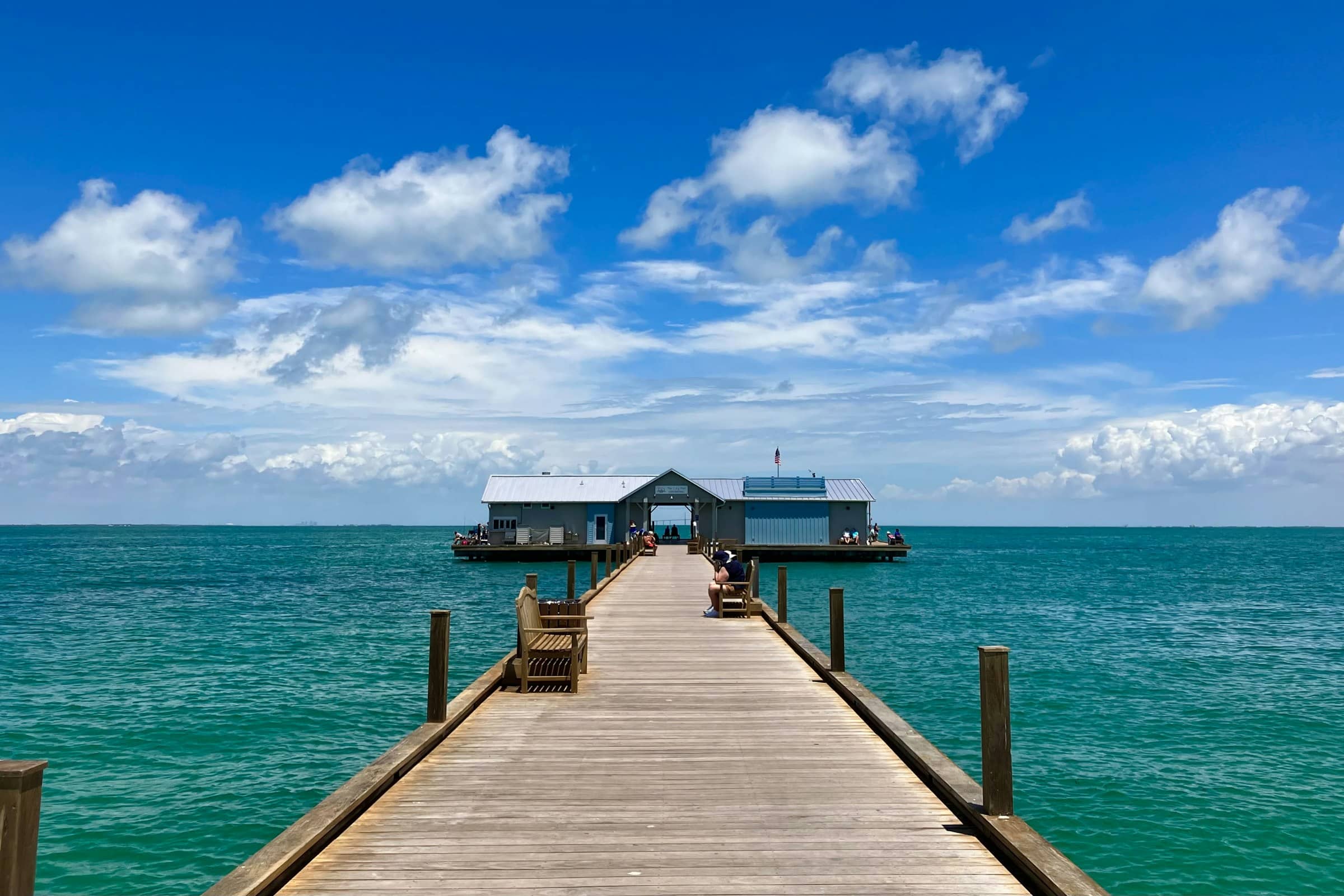
The short version
Anna Maria Island is a seven-mile barrier island on Florida's gulf coast, west of Bradenton and north of Longboat Key. Three small cities share it: Anna Maria at the north end, Holmes Beach in the middle, and Bradenton Beach to the south. Nothing on the island stands above three stories, a free trolley runs its length, and the beaches face the open gulf. Spring brings the most reliable weather, and late autumn the quietest weeks. Fly into Sarasota, about forty minutes away, or Tampa, about ninety.
When to visit Anna Maria Island
Spring is the most reliable season on Anna Maria Island. From March into May the days are warm but not punishing, and the water has come back from its winter cool. The island is at its busiest then but never loud, since a place with no high-rises can only get so loud. Book early, because the island's small stock of houses is spoken for months ahead.
November into early December is the quiet choice, for people who can travel then. It is dry, mild, empty and cool enough that the beach belongs to walkers more than swimmers. The winter visitors arrive after the holidays and stay through spring.
Summer and hurricane season
Summer is hot and humid, and it runs on an afternoon rhythm. Mornings are clear, and a thunderstorm comes through most afternoons around four. The storm passes in an hour, and the evening it leaves behind is the best part of the day. By August the gulf is as warm as bathwater.
September and October are quieter still, and the water holds its warmth. These months are also the heart of hurricane season, so keep your plans flexible if you come then.
Getting to the island
Sarasota Bradenton is the close airport, about forty minutes from the island. Tampa is the larger airport, about ninety minutes north, and the better choice for long-haul connections. Every road onto the island crosses the Intracoastal, and that crossing is part of why the island feels the way it does.
Two bridges cross from the mainland. Manatee Avenue takes you to Holmes Beach, and Cortez Road takes you to Bradenton Beach.
The Cortez Road route runs through Cortez, one of the last working fishing villages on this coast. Arrive hungry, because the fish houses at the water's edge sell what the boats landed that morning.
Getting around by trolley
A free trolley runs the length of the island, from Anna Maria in the north to Coquina Beach in the south. Most of what you want sits a short walk from a stop. Once you are over the bridge, your car becomes something you park.
The whole island is seven miles, tip to tip, and the trolley covers it while you watch the water. Parking at Bean Point is scarce by design, which is one more reason to ride.
The island, end to end
Three small cities share the island's seven miles. The city of Anna Maria holds the north end and keeps the island's oldest character. Holmes Beach holds the middle and the broadest sand. Bradenton Beach, at the south end, is the livelier third. The free trolley joins all three.
- Pine Avenue, in Anna Maria, has shops and cottages.
- Two wooden piers on the bay side of Anna Maria draw locals who fish whether or not anything bites.
- Bradenton Beach has Bridge Street's restaurants and the old city pier.
- Coquina Beach has a long stand of Australian pines and the parking the north end refuses to build.
Bean Point at sunset
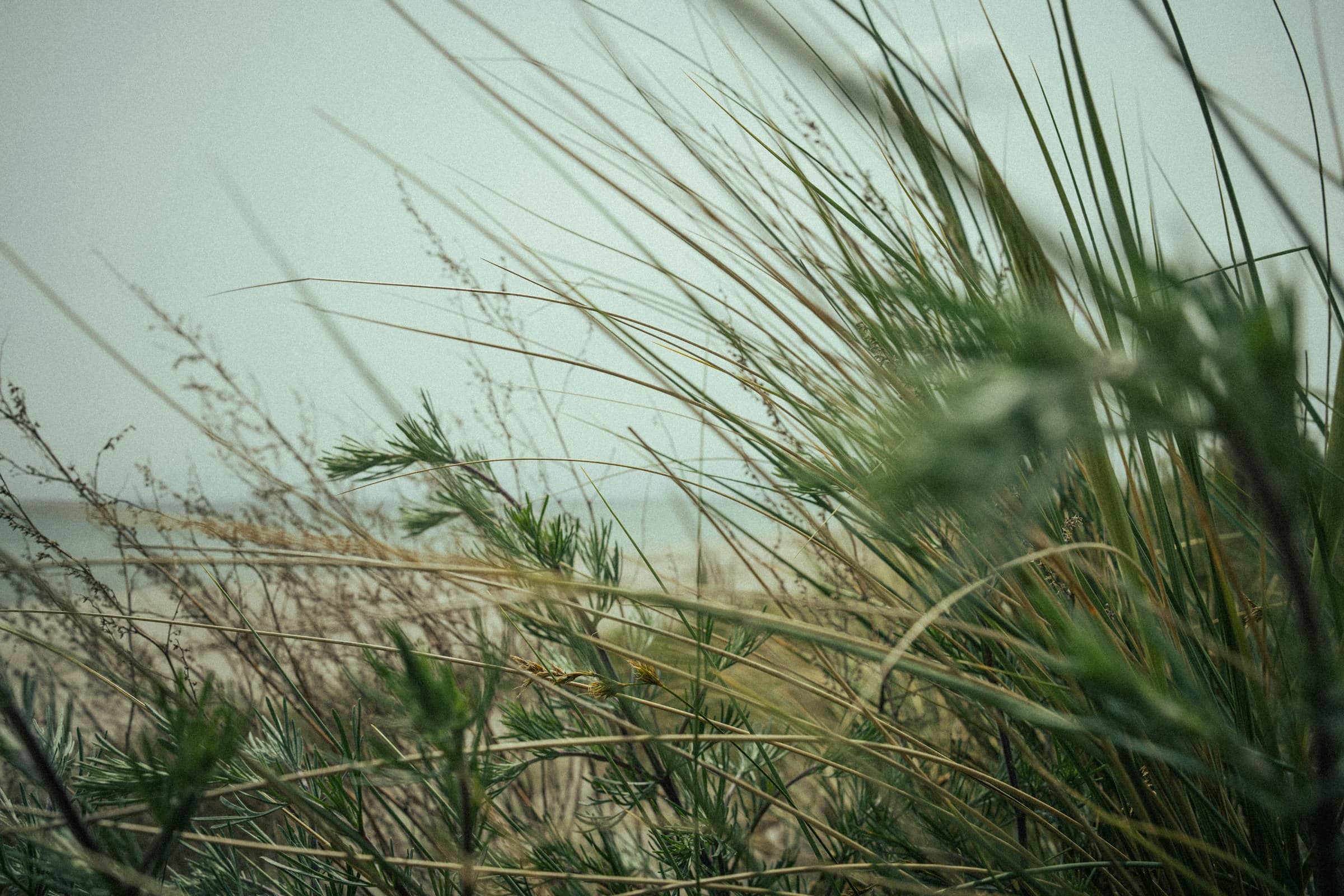
Bean Point is the northern tip of the island, where Tampa Bay meets the gulf. It is a wide triangle of sand with no facilities and almost no parking. The Sunshine Skyway bridge sits on the horizon, and the pass runs fast offshore. This is where the island goes for sunset.
The three-story height limit
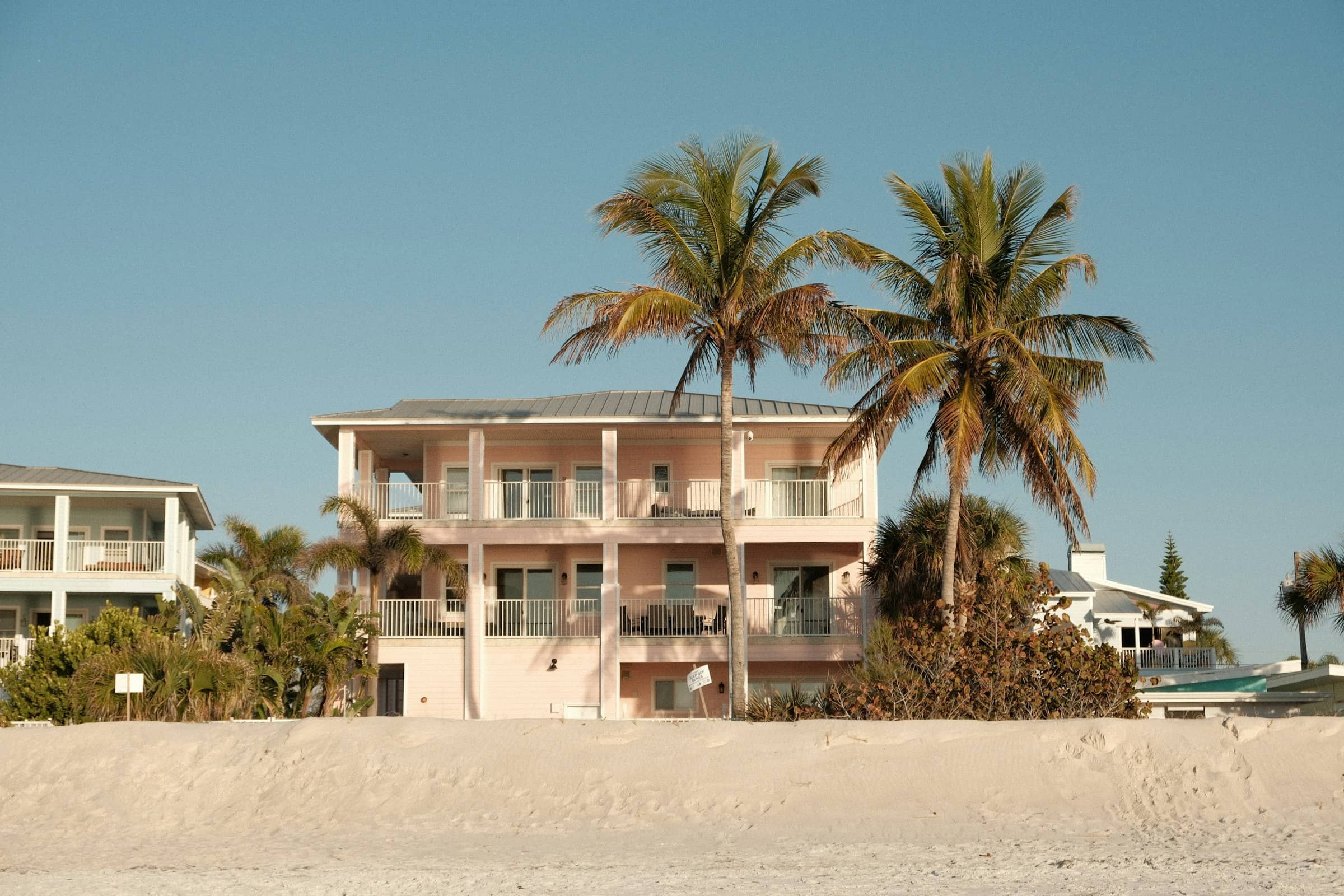
Nothing on Anna Maria Island stands taller than three stories, by rule and by temperament. The result is the gulf coast as it looked before the towers. You see cottages, stilt houses and small motels with their names on painted signs. The skyline is palms and Norfolk pines, not balconies.
The limit is why the late-afternoon light on the beach is uninterrupted. It is also why the island photographs the way the coast used to.
Turtle nesting season
From May through October, the island's beaches are turtle nesting grounds. The island keeps its habits for those months as deliberately as it keeps the height limit. It is a place with rules, and the rules are the reason it is still worth the drive.
- Turn lights off after dark, or switch them to amber.
- Fill in any holes you dig in the sand.
- Respect the staked-off nests along the dune line.
Where to stay on the island
Each end of the island suits a different stay, so choose the end first, and choose it early. The island lets small and books long. The difference between a house on the sand and a house three rows back is settled months before the season starts.
- The city of Anna Maria is the quiet choice, walkable to Pine Avenue and Bean Point.
- In Anna Maria, the gulf-front houses sit where the island is at its narrowest.
- Holmes Beach is the practical center of the island.
- Bradenton Beach puts you nearest the restaurants and the evening noise, such as it is.
- The canal streets on the bay side trade the sunset for a dock, which suits anyone with a boat.
Residence in Anna Maria, Florida
An Old-Florida cottage on Anna Maria Island: a deep wrap-around porch, palms to the water, a private dock, and not a highrise in sight.
Common questions
- When is the best time to visit Anna Maria Island?
- March through May brings the most reliable weather. November into early December brings quiet. September has the warmest water, if you can keep your plans loose through hurricane season. Summer runs hot, with a storm most afternoons and evenings that make up for it.
- Do you need a car on Anna Maria Island?
- To arrive, yes, but once you are there, barely. A free trolley runs the length of the island, from Anna Maria to Coquina Beach. Most of what you want is a short walk from a stop. Parking at Bean Point is scarce by design, which is another reason to take the trolley.
- Which end of the island is the quietest?
- The north end. The city of Anna Maria keeps the smallest scale and the oldest habits. The beach at Bean Point has no facilities to draw a crowd. Bradenton Beach, at the south end, is where the restaurants and the evening life gather.
- Is the gulf warm enough to swim year-round?
- From late spring through October, yes, and by late summer the water is as warm as the air. In winter it drops into the sixties Fahrenheit. That is fine for a walk at the tideline but brisk for a swim. It is why the cooler months belong to shellers and fishermen.
- Which airport is closest to Anna Maria Island?
- Sarasota Bradenton, about forty minutes from the island. Tampa is the larger airport, about ninety minutes north, and the better choice for long-haul connections.
Tell us the dates and the party, and we will tell you what is open on the gulf coast and what we would hold out for. Availability is confirmed in conversation rather than by a calendar.
Plan a stay on Anna Maria IslandPlan the week, not the logistics.
Tell us the dates and the party, and we will tell you what is open on the gulf coast and what we would hold out for. Availability is confirmed in conversation rather than by a calendar.
Plan a stay on Anna Maria Island