· Revised October 2026
A traveler's guide to Scenic Highway 30A.
How the beach towns along Scenic Highway 30A differ, when to come, and why the coastal dune lakes make this stretch of the Florida Panhandle rare.
[ paddle western lake before the wind wakes. ]
The short version
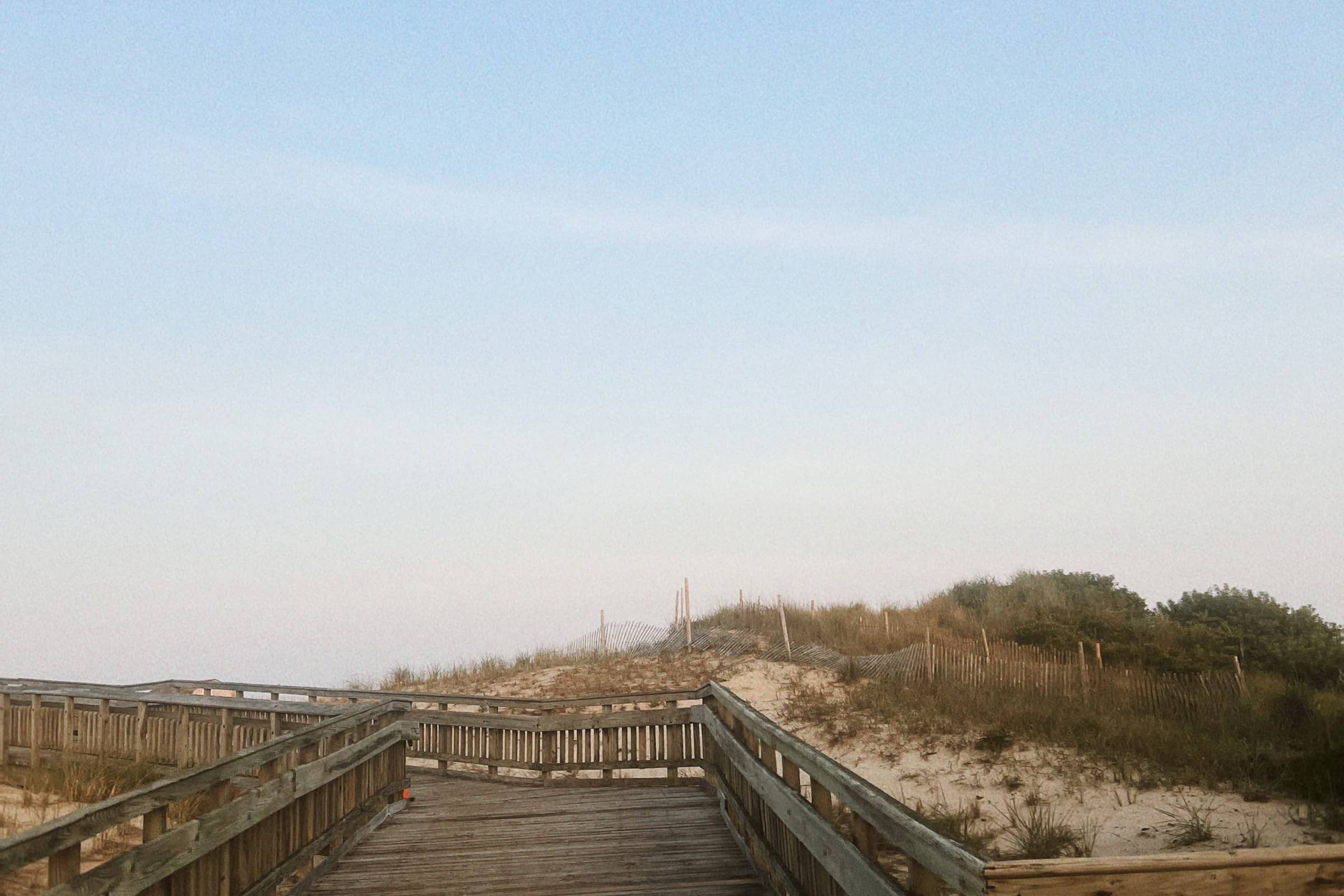
Scenic Highway 30A is a county road along the Gulf of Mexico in South Walton, on the Florida Panhandle. It threads a string of small beach towns between Destin and Panama City Beach. The sand is white quartz and the water runs clear. Behind the dunes sit coastal dune lakes, a landform found in only a handful of places on earth. Each town keeps its own character, from unplanned old Grayton Beach to the drawn-from-scratch streets of Seaside and Rosemary Beach. Aim for spring or autumn.
When to go on 30A
Spring and October are the best times to visit 30A. Winter is the season the road half-keeps, because the Panhandle is the cool end of Florida. On a cold beach evening, a fire makes its own argument for coming then.
- Spring, March through May, is warm and dry, with the gulf swimmable and the towns not yet summer-full.
- Summer is the family high season, booked out, sun-struck and priced to match.
- October brings warm water, the crowds gone, and the light at its longest angle.
- Winter, December through February, brings jacket weather, empty towns, some quiet kitchens and extraordinary light.
Getting to 30A
Two airports bracket Scenic Highway 30A. Destin Fort Walton Beach airport sits about forty-five minutes off the western end of the road. Northwest Florida Beaches airport, outside Panama City, sits about forty minutes off the eastern end. From either one, the last stretch of the drive is the point.
30A itself is a two-lane county road that refuses to hurry. The sooner you stop trying to hurry it, the sooner the trip starts.
The Timpoochee Trail
The best way to travel 30A is the Timpoochee Trail, a paved path that runs nearly the whole length of the road. It threads the towns, the state parks and the dune lakes, and on a bicycle errands turn into the best part of the day.
Park the car at the house and leave it there, because the towns sit closer together than the driving traffic suggests.
The dune lakes
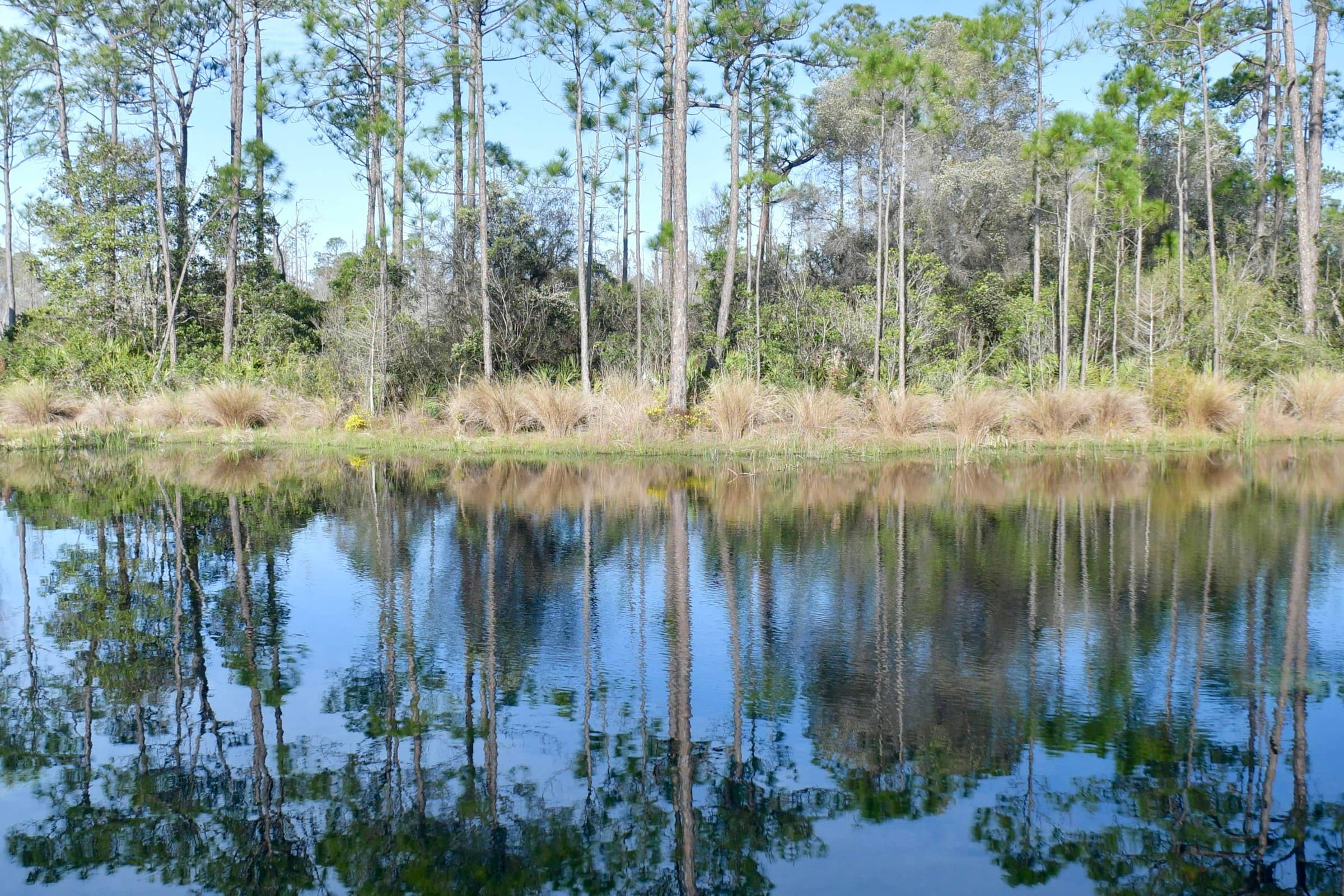
Coastal dune lakes sit behind the beach at intervals along the whole road. Each is still, tea-dark fresh water within sight of the surf, with only the dune between them. The landform is genuinely rare on a world scale, and Walton County holds more than a dozen of them, named and mapped like a fleet.
What makes them strange is the exchange. After heavy rain, a lake can breach its dune and run to the sea in a braided outfall across the sand. Salt and fresh water trade places for a day or two before the beach seals itself again.
Western Lake at dawn
Western Lake, behind Grayton Beach, is the dune lake to see first. Paddle it in the early morning, before the wind wakes, when the pines still lie reflected in the water. At that hour the gulf beyond the dune is a sound rather than a sight.
The towns, west to east
The towns along Scenic Highway 30A come in two kinds. The western miles are the loose ones. The planned towns follow to the east, each drawn on purpose. The trick of 30A is that all of them sit on one bicycle path, and none of them repeats.
- Dune Allen and Blue Mountain Beach are low-key and residential.
- Topsail Hill Preserve holds the widest empty sand on the road.
- Grayton Beach is the oldest settlement and the shaggiest, with live oaks over sandy lanes.
- Seaside, drawn from scratch in the eighties, has white pickets, pastel gables and a working town square.
- WaterColor and WaterSound flank Seaside in quieter registers.
- Alys Beach is white masonry and courtyards, closer to the Mediterranean than to Miami.
- Rosemary Beach ends the road in cobbles and dark timber.
Where to stay on 30A
Choose the town on 30A by temperament, not by ranking.
- The planned towns are walkable, polished and social, with neighbors on the porch.
- In the planned towns, coffee, the green and the gulf sit within two hundred steps.
- Grayton and the western beaches, looser and greener, suit a party that wants the beach more than the town.
- The stretches against the state parks are the darkest at night and the quietest at dawn.
Choosing the house
Whatever the town, the house matters more than the address suffix. Look for a porch that catches the evening, bicycles in the garage, and the gulf inside a five-minute walk. Everything else on this road is negotiable, so spend your care on those three things.
Residence in Alys Beach, Florida
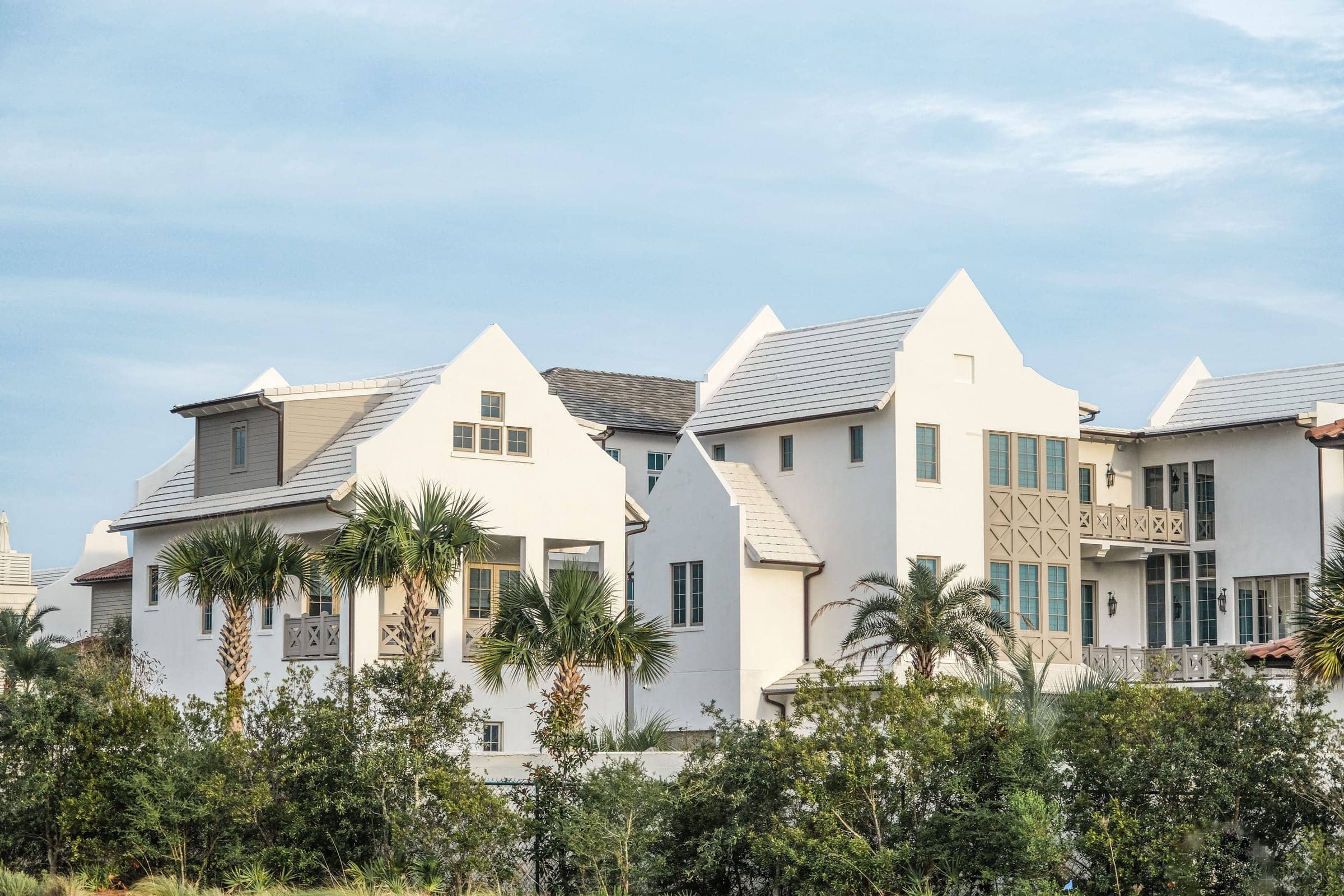
A white-stucco courtyard residence at Alys Beach on Florida's 30A, its loggia and fountain a short barefoot walk from the Gulf.
Common questions
- What is a coastal dune lake?
- It is a freshwater lake lying directly behind beach dunes, close enough to the sea to exchange water with it. After heavy rain, a lake can breach the dune and run a temporary outfall across the sand. The landform occurs in only a few places worldwide, and the 30A corridor holds more than a dozen.
- Which town on 30A should a first visit choose?
- Seaside or WaterColor give you the walkable, postcard version of the road. Rosemary Beach offers the same idea in a more formal register. Grayton Beach is the older, looser Florida underneath it all. The towns sit minutes apart, so a first visit can see them all by bicycle in an afternoon.
- Can you get around 30A without a car?
- Once you have arrived, yes, and it is better that way. The Timpoochee Trail runs nearly the road's full length as a paved path. The towns are closer together than the driving traffic suggests. Arrive by car, or fly into Destin Fort Walton Beach or Panama City, then park the car.
- Which airport is closest to 30A?
- Two airports bracket the road. Northwest Florida Beaches, outside Panama City, is about forty minutes from the eastern end. Destin Fort Walton Beach is about forty-five minutes from the western end. The better pick depends on which end of the road you are staying on.
- When is 30A the quietest?
- Deep winter, from December through February, is the quietest time. The Panhandle turns cool and the towns half-close, so it is beautiful, jacket weather, and not for swimmers. For quiet with warm water, aim for the shoulders instead: late April before the summer crowd, or October after it.
Tell us the dates and how the party travels, and we will be honest about which stretch of the road fits: the porches of the planned towns, or the dark quiet against the parks.
Plan a stay along 30AThe right town, for the right week.
Tell us the dates and how the party travels, and we will be honest about which stretch of the road fits: the porches of the planned towns, or the dark quiet against the parks.
Plan a stay along 30A