The tide writes.You collect.
How shelling actually works on the gulf barrier islands: the tides that matter, the winter advantage, what you will find, and the one live-shell rule.
[ falling tide, first light, after a north blow. ]
The short version
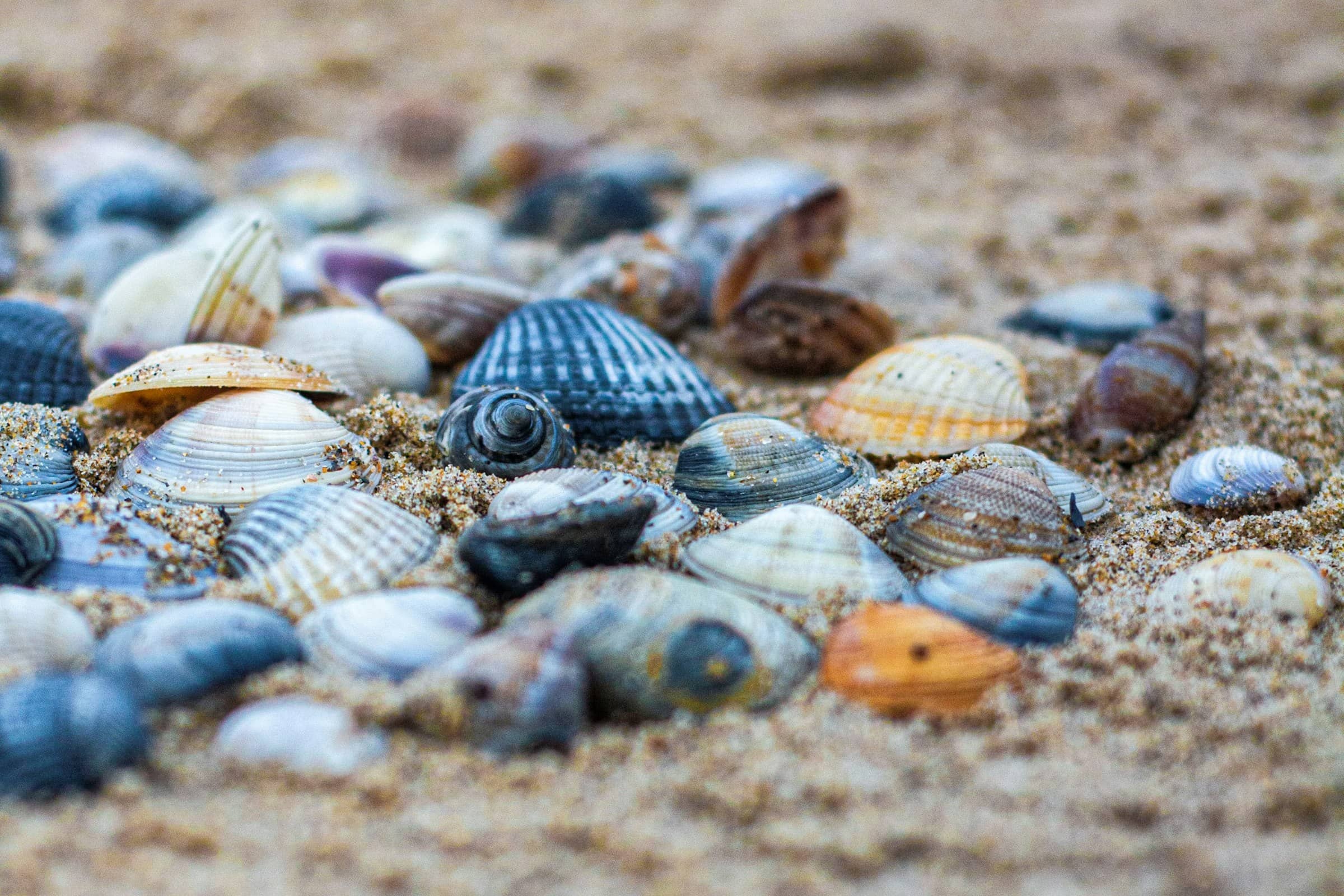
The gulf barrier islands shell well because geography files everything conveniently: a shallow shelf, long-shore currents, and passes that sort the sea's output onto predictable sands. The craft is timing, not luck. Work the falling tide to its low, go at first light before the day's audience, and go in winter after a north blow if you want the beach at its most generous. Expect whelks, olives, cockles, sand dollars and the occasional fighting conch, and put anything living back where the water can keep it.
Reading the tide
Shells land where moving water slows, so the searching happens on the falling tide and the finding peaks at low: the wrack line from the last high, the wet apron below it, and the bars and pass mouths where the current sorts by weight. An hour either side of low water is the working window, and the tide chart is the only equipment that matters.
First light multiplies everything. The night's deposit is unpicked, the walkers are few, and the low sun rakes the sand so every ridge throws a shadow. The serious shellers you pass at seven with full bags did not get lucky; they read the same chart you now can.
The winter advantage
Summer visitors shell the gulf; winter residents harvest it. The cool months bring north winds that stir the shelf and throw its inventory ashore, and the mornings after a blow are the season's jackpots: whelks the size of a fist, banded tulips, angel wings if the sand gods are feeling generous. Cold-morning shelling in a jacket, thermos in the free hand, is one of the coast's best-kept rituals.
The islands sort themselves too. Pass-adjacent beaches catch the heavy traffic; long unbroken strands file the small and delicate. Ten minutes' local advice, ours or any fish-house counter's, points the morning better than any app.
What you will find, and the one rule
The reliable cast: lightning whelks left-handed and smug about it, lettered olives glossy as fountain pens, calico scallops, cockles, pen shells, sand dollars bleaching in the wrack, and fighting conchs that are far gentler than their branding. The rare finds, junonia above all, are rare precisely so that someone at dinner can be insufferable about theirs.
The rule is single and absolute: live shells stay. Turn anything occupied, olive with its animal home, sand dollar still velvet and moving, back to the water it came from. The beach replenishes on that courtesy, and the collection you keep is better for being honestly emptied first.
Common questions
- When is the best time to shell on the gulf coast?
- The hour either side of low tide, at first light, and best of all in winter on the mornings after a north blow has stirred the shelf. Summer shells fine; winter shells generously.
- What shells can you realistically find?
- Whelks, lettered olives, scallops, cockles, pen shells, sand dollars and fighting conchs are the dependable cast, with tulips and murexes for the patient and the junonia as the coast's lottery ticket.
- Can you keep what you find?
- Empty shells, yes, within ordinary sense. Anything alive goes back, olives with the animal inside, moving sand dollars, occupied whelks, and Florida law agrees on several species. The habit is easy: check the door before you keep the house.
Tell us the dates and the house comes shelling-ready: the week's tides printed, buckets in the outdoor shower, and the right stretch of sand a dawn walk away.
Plan a shelling weekA tide charton the fridge, day one.
Tell us the dates and the house comes shelling-ready: the week's tides printed, buckets in the outdoor shower, and the right stretch of sand a dawn walk away.
Plan a shelling week